

You can place a porta potty in your Macon backyard, but you’ll need to comply with Bibb County’s zoning regulations and obtain proper permits from the Building Inspection Department. Residential zones require a minimum 10-foot setback from property lines, and you must secure health department approval for waste management standards. Check your HOA’s CC&Rs, as most prohibit visible portable toilets without written authorization. Understanding the complete regulatory framework and placement requirements will guarantee your installation meets all compliance standards.
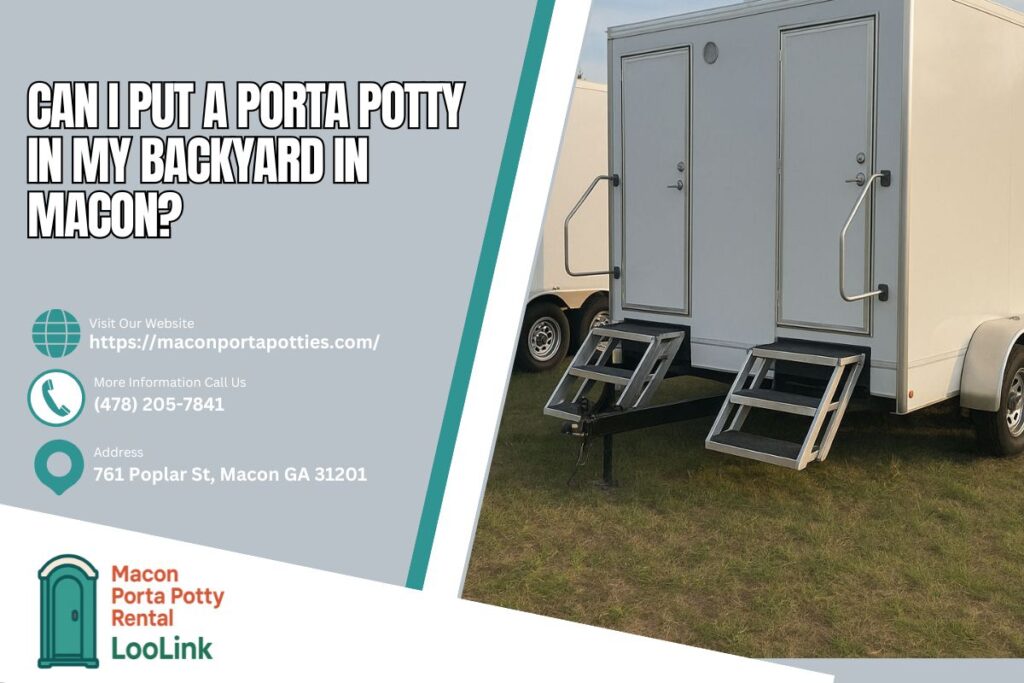
Where you place a porta potty in Macon directly impacts your compliance with local zoning ordinances and health regulations.
You’ll need to verify the setback requirements from property lines, typically a minimum of 10-15 feet. Check if your residential zone permits temporary sanitary facilities – some restrict commercial equipment in residential areas.
You must obtain proper permits from Bibb County’s Building Inspection Department before installation.
Health department approval guarantees compliance with waste management standards and groundwater protection protocols. Verify HOA restrictions if applicable, as private covenants often prohibit portable facilities.
Position units away from wells, septic systems, and neighboring windows.
Maintain accessibility for service vehicles while respecting utility easements.
Document your compliance efforts – permits, approvals, and placement measurements protect you from potential violations and fines.
See also: porta potty rental service near Macon
Although Macon’s zoning framework appears straightforward, you’ll encounter specific ordinances that directly affect porta potty placement beyond basic setback requirements.
| Zone Type | Minimum Setback | Duration Limit |
|---|---|---|
| Residential | 10 feet from property lines | 30 days maximum |
| Commercial | 5 feet from structures | 180 days with permit |
| Industrial | Variable by district | No specific restriction |
| Mixed-Use | 8 feet from habitable spaces | 90 days renewable |
You’re obligated to maintain compliance with waste management ordinances that govern temporary sanitation facilities. These regulations guarantee proper ventilation distances from neighboring properties and establish clear protocols for waste removal frequency.
Your property’s specific zoning classification determines both placement flexibility and operational constraints. Understanding these distinctions prevents costly violations while maximizing your installation options within legal boundaries.
Before municipal regulations even apply, your homeowners association’s covenants, conditions, and restrictions (CC&Rs) typically impose stricter limitations on temporary sanitation facilities than city ordinances.
You’ll need to review your HOA’s architectural guidelines and outdoor equipment restrictions before proceeding.
Most HOAs prohibit the use of visible portable toilets within residential areas, even on private property. Your association may require written approval through their architectural review committee, specifying placement duration, screening requirements, and removal timelines.
Check your CC&Rs for specific language regarding “temporary structures,” “construction equipment,” or “sanitation facilities.” Some associations allow porta potties during approved renovation projects but require advance notification and compliance with placement guidelines.
Don’t assume your HOA will automatically approve your request. Submit detailed plans that clearly show the exact placement, screening methods, and project timelines to enhance approval chances while maintaining the neighborhood’s aesthetics.
Once you’ve secured necessary approvals from your HOA and local authorities, several legitimate scenarios justify installing a porta potty in your Macon backyard.
Property owners frequently utilize temporary sanitation solutions when:
These situations demonstrate practical necessity while maintaining compliance with local regulations and respecting neighborhood standards.
When major home renovations disrupt your primary plumbing systems, you’ll need compliant temporary sanitation solutions that meet both contractor requirements and municipal health codes.
Construction crews can’t operate without accessible facilities, and you’re responsible for providing code-compliant options during extended projects.
Bathroom renovations, kitchen remodels affecting water lines, or whole-house projects requiring main water shutoffs create situations where portable sanitation becomes vital.
You’ll maintain project continuity while satisfying OSHA requirements for worker facilities and avoiding costly delays from non-compliance issues.
Strategic placement guarantees easy contractor access without interfering with material deliveries or equipment staging.
You’ll bypass permit complications by choosing locations that don’t violate setback requirements or obstruct emergency access routes, keeping your renovation on schedule.

How do you guarantee sanitation compliance for backyard celebrations that exceed your home’s restroom capacity? When hosting outdoor gatherings, you’re responsible for maintaining health department standards while preserving your guests’ comfort and dignity.
Backyard porta potty placement requires strategic compliance planning:
You’ll avoid costly citations while maintaining the quality of your event.
LooLink’s compliance expertise eliminates regulatory guesswork, allowing you to focus on celebrating success rather than navigating bureaucracy.
Before installing a porta potty in your Macon backyard, you must determine which permits are required for your specific situation. Bibb County regulations typically govern temporary sanitation facilities on residential properties.
You’ll need to contact the Bibb County Building Inspection Department to verify permit requirements for your specific installation duration and location.
Most temporary backyard installations under 30 days don’t require permits, but permanent or semi-permanent placements often do. Your homeowner’s association may impose supplementary restrictions that supersede county regulations.
Commercial events or gatherings exceeding certain attendance thresholds trigger different permit categories.
Check setback requirements from property lines, wells, and septic systems. Georgia Department of Public Health regulations also apply to waste management compliance.
Verify your installation meets all applicable codes before placement to avoid costly violations or removal orders.
Although most residential porta potty installations qualify as temporary uses, you’ll still need to obtain proper documentation from Bibb County’s Planning and Zoning Department.
These permits protect your freedom to use your property while ensuring compliance with local regulations.
The temporary use permit process typically requires:
You’ll receive written authorization specifying the duration and conditions of your permit.
Most temporary permits last 30-90 days, giving you flexibility for events, renovations, or extended projects without bureaucratic interference.
When installing a porta potty in your Macon backyard, you must comply with the North Central Health District’s sanitation requirements that govern waste containment and public health protection.
The district mandates proper setback distances from water wells, typically requiring a minimum separation of 100 feet. You’ll need adequate ventilation systems and secure waste storage to prevent contamination risks.
Regular maintenance schedules are non-negotiable—waste must be pumped according to district specifications. Your unit can’t create odor nuisances or attract pests that affect neighboring properties.
The health department requires proper disinfection protocols and may conduct inspections to verify compliance.
Documentation of waste disposal through licensed haulers is mandatory. These regulations protect your freedom to use temporary sanitation while ensuring community health standards are safeguarded.
Since residential porta potty installations must meet specific regulatory standards, you’ll need to select units that comply with Macon’s zoning ordinances and health district requirements. Your choice directly impacts regulatory approval and neighborhood acceptance.
Consider these crucial factors when selecting your residential unit:
Choose units that balance regulatory compliance with your property’s specific zoning restrictions and aesthetic requirements.
Space-conscious homeowners often choose compact and low-profile porta potty models to meet both regulatory requirements and aesthetic property standards.
You’ll find these units typically measure 44 inches wide by 48 inches deep, standing 88 inches tall—significantly shorter than standard models. This reduced height helps minimize visual impact while maintaining full functionality.
Low-profile designs blend seamlessly with residential landscaping and won’t overwhelm your outdoor space.
You’re still getting crucial features like waste tanks, hand sanitizer dispensers, and proper ventilation systems. These units meet health department specifications while respecting neighborhood aesthetics.
When selecting compact models, verify that they comply with Macon’s residential placement requirements.
You’ll maintain your property’s visual appeal while ensuring guests have convenient, regulation-compliant facilities that won’t overwhelm your backyard environment.
Although standard porta potties rely on chemical treatments alone, flushable units incorporate pressurized water systems that considerably reduce odors and improve sanitation standards.
These advanced systems give you freedom from regulatory concerns while maintaining neighborhood harmony in your Macon backyard installation.
Key flushable and odor-control features include:
You’ll comply with Georgia health codes while protecting your property investment.
These upgraded units cost more initially but deliver superior performance for extended backyard placement, ensuring your guests experience comfort without compromising your neighborhood relationships.
When positioning your porta potty in your Macon backyard, you must maintain minimum setback distances from property lines, wells, and septic systems to comply with Georgia Department of Public Health regulations.
Position the unit on level ground, away from overhanging branches and direct sunlight to minimize odor buildup. You’ll need clear vehicle access for delivery and servicing—typically 8-10 feet of clearance. Secure the unit properly to prevent tipping during Georgia’s storm season.
For maintenance compliance, schedule regular pumping every 1-2 weeks, depending on usage volume. You’re responsible for ensuring adequate ventilation and checking that waste levels don’t exceed capacity limits.
Keep the unit clean between services using approved sanitizers. Document maintenance schedules to demonstrate regulatory compliance if questioned by local authorities.
Georgia state regulations mandate specific setback requirements for temporary sanitary facilities in residential areas.
You’ll need to maintain proper distances to protect your property rights while ensuring compliance with local ordinances.
Essential setback requirements include:
You’re free to place your unit anywhere within these parameters.
Macon’s zoning department can verify specific requirements for your property.
Clever placement protects your investment while maintaining good relationships with neighbors and regulatory compliance.
Once your porta potty’s properly positioned, establishing a maintenance schedule becomes your next regulatory obligation.
Macon’s health department requires waste removal every 72 hours for residential installations. To maintain accurate and documented service records, you must adhere to this requirement. You can’t skip cleanings—accumulated waste creates code violations that’ll trigger fines and potential removal orders.
Your service provider must use EPA-approved sanitizers and follow Georgia’s waste transport regulations. They’ll pump waste, refill water tanks, and restock supplies during each visit.
You’re responsible for ensuring unobstructed access for service trucks and maintaining clear pathways.
Keep service logs readily available for inspections. Missing documentation means compliance failures.
Schedule regular cleanings even during low-use periods—stagnant waste violates health codes regardless of usage frequency. Proper maintenance protects your installation rights.
Selecting the right rental provider is crucial for ensuring the success of your installation’s compliance and operational reliability.
You’ll need a service that understands Macon’s regulatory landscape and delivers consistent performance without restricting your property autonomy.
Essential Service Requirements:
While many commercial rental companies restrict their services to commercial properties, Macon’s specialized providers focus specifically on backyard installations and homeowner compliance requirements.
You’ll find local operators who understand Georgia’s residential sanitation codes and HOA regulations that affect your property.
LooLink specializes in residential porta potty placements, ensuring your unit meets all municipal requirements while respecting your neighbors’ concerns.
We’ll handle permit applications, calculate setback distances, and implement waste management protocols that comply with Bibb County health standards.
Your chosen provider should offer flexible rental terms, discreet delivery schedules, and regular maintenance that doesn’t disrupt your household routine.
We’ll coordinate with your property’s existing utilities and drainage systems to ensure seamless integration, without violating local zoning restrictions or environmental protection guidelines.
Professional delivery teams arrive at your Macon property with specialized equipment designed for residential installations, including ground protection mats and compact positioning machinery that prevents lawn damage.
Service protocols guarantee compliance with local health department regulations while maintaining your property’s privacy and accessibility.
Standard delivery includes:
You’ll receive direct communication regarding service schedules, allowing you to maintain your routine without disruption.
All installations meet Georgia Department of Public Health standards while respecting your residential environment.
You’ll typically pay $75-150 for standard weekend backyard porta potty rentals in Macon. Pricing is determined by rental duration, unit type, and the distance of delivery. You’re free to choose upgrades, such as handwashing stations, though they’ll increase your total cost accordingly.
You can keep your porta potty rental for as long as needed, whether it’s for a week, a month, or an extended period. We’ll schedule regular service visits to maintain sanitation standards and ensure you meet local health regulations throughout your rental duration.
You’re responsible for damage costs beyond normal wear during your rental period. LooLink’s rental agreement specifies damage assessment procedures and liability terms. Report incidents immediately to avoid extra charges and guarantee compliance with your contract obligations.
You shouldn’t relocate your porta potty yourself after delivery. Moving it violates safety regulations and rental agreements. Professional equipment and proper waste handling protocols are required. Contact LooLink for authorized repositioning to maintain compliance and avoid liability issues.
You’ll receive fully-stocked units with commercial-grade toilet paper and hand sanitizer that meet health department standards. We guarantee that you’re not restricted by supply shortages, allowing you to maintain your independence while complying with Macon’s sanitation requirements throughout your rental period.





© 2026 Macon Porta Potty Rental | LooLink. All Rights Reserved.